
What is Acute Leukemia?
What is acute leukemia?
Leukemia is a type of blood cancer that takes place in the
bone marrow
where normal blood cells are made. It starts with a single
stem cell
that becomes an abnormal cell—or a leukemia cell.
Normally, stem cells go through different stages before they fully develop into healthy blood cells, which include red blood cells, white blood cells, and platelets.




Red blood cells carry oxygen all throughout your body


White blood cells protect your body and fight infections




Platelets help your blood clot to stop bleeding
Normally, stem cells go through different stages before they fully develop into healthy blood cells, which include red blood cells, white blood cells, and platelets.
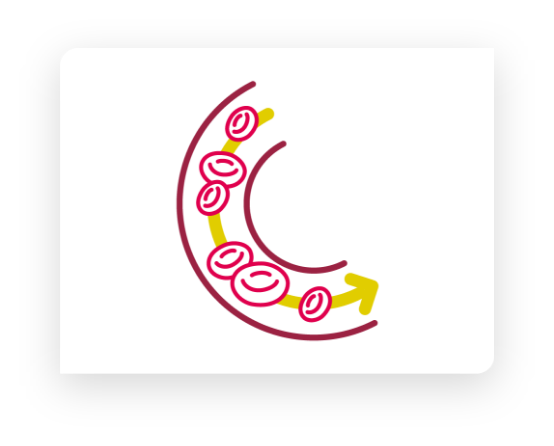
Red blood cells carry oxygen all throughout your body

White blood cells protect your body and fight infections
Platelets help your blood clot to stop bleeding
With acute leukemia, the abnormal leukemia cells (or blasts ) multiply very quickly and take over the space in the bone marrow. This blocks the cells from turning into normal healthy blood cells. Acute lymphoblastic leukemia (or ALL) and acute myeloid leukemia (or AML) are two different types of acute leukemia that stop cells from developing into healthy blood cells and lower your healthy blood cell count.
WHAT IS NPM1m?
What is NPM1m?
When you were first diagnosed with AML, your doctor ran a
workup of tests
workup of tests
to see the exact type of acute leukemia you have. Part of that workup included genetic testing that can detect genetic changes, such as mutations, that may have caused your specific type of AML. NPM1
mutations
are the most common type of genetic change in AML.
NPM1 mutations can play an important role
in the development of AML
In general, AML is more common in older adults, but it can affect people of any age and gender. Around 1 in 3 adults with AML have an
NPM1
mutation.
Here’s a breakdown of the percent of people with AML who may have an NPM1 mutation (NPM1m):

Children

Adults
~30%
~6%-8%

Actor portrayal.
Learn more about
how Revuforj works
to target AML with
an NPM1 mutation
Actor portrayal.
WHAT IS KMT2Ar?
What is KMT2Ar?
When you were first diagnosed with ALL or AML, your doctor ran a
workup of tests
to see the exact type of acute leukemia you have. Part of that workup included genetic testing that can detect genetic changes, such as mutations and
gene rearrangements
, that may have caused your specific type of ALL or AML. The majority of KMT2A rearrangements include translocations—a type of genetic change in which a piece of one
chromosome
breaks off and attaches to another chromosome.
KMT2A rearrangements (including translocations),
may play a role in the development of both AML and ALL
In general, AML is more common in adults, and ALL is more common in infants, children, and young adults. But AML and ALL can affect people of any age and gender.
Here’s a breakdown of the percent of people with AML or ALL who may have a
KMT2A
![See less circle]() gene rearrangement (KMT2Ar):
gene rearrangement (KMT2Ar):

Infants

Children
Adults
KMT2Ar AML
KMT2Ar AML
KMT2Ar AML
KMT2Ar ALL
KMT2Ar ALL
KMT2Ar ALL
KMT2Ar AML ~35%-60%
KMT2Ar AML ~10%-15%
KMT2Ar AML ~5%-10%
KMT2Ar ALL ~80%
KMT2Ar ALL ~5%-6%
KMT2Ar ALL ~5%-15%

Actor portrayal.
Learn more about
how Revuforj works
to target acute leukemia with
a KMT2A translocation
Learn more about how Revuforj works to target acute leukemia with a KMT2A translocation
Actor portrayal.